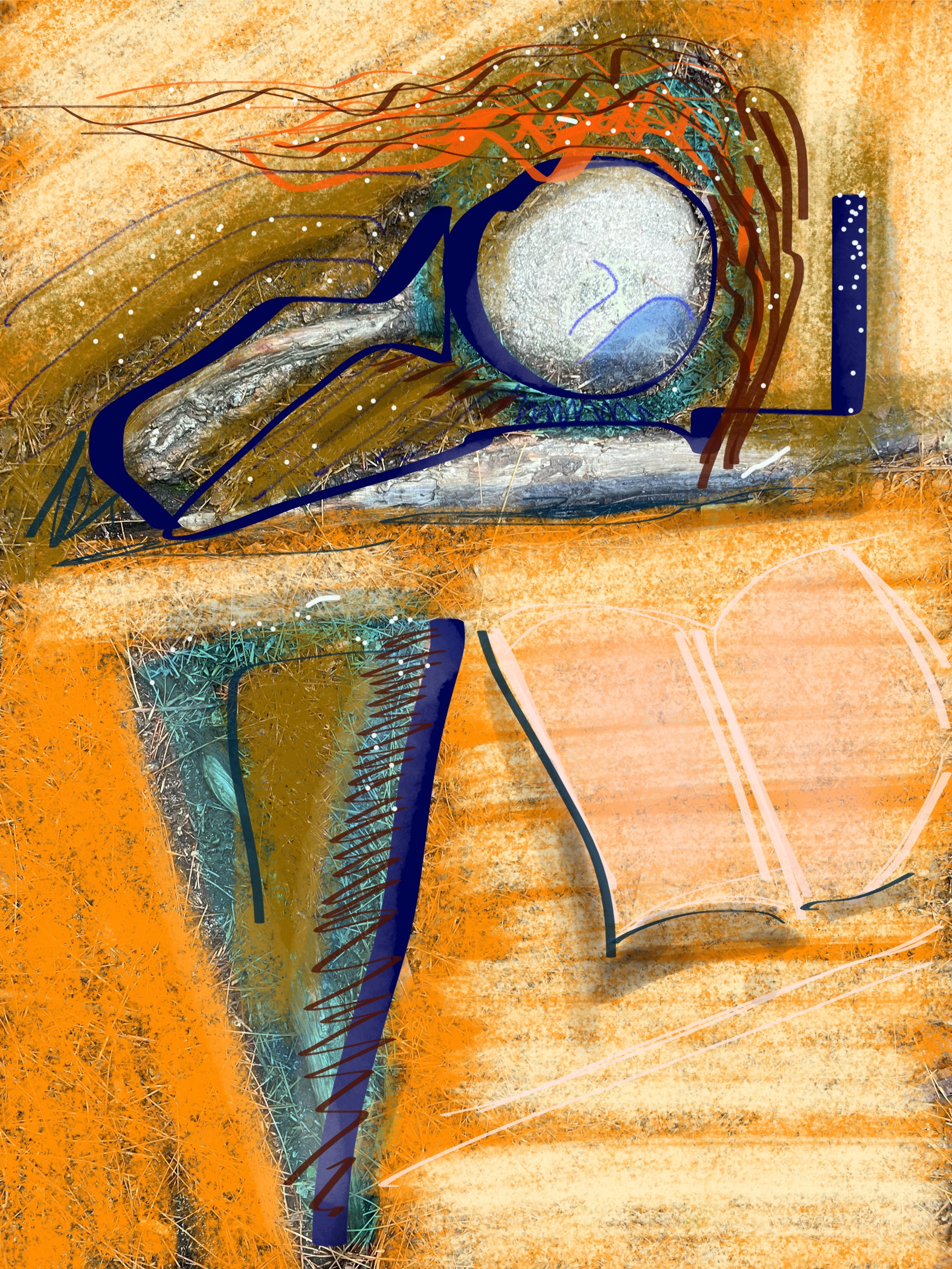
Fiction vs non and protecting people and privacy while writing.
My mother in law used this expression a while back and I found it immediately empowering. That’s because I’ve been wrestling with my right to write what I know without backing up my assertions with external credentialing (like a pile of degrees and expert sources), or named examples (like stories of personal and business approaches, results and relationships). 1
IE, I don’t understand exactly how one shares real world knowledge, practice, experience, and/or decades of life lessons without also inadvertently identifying folks I see as innocent, guilty, friends, foes, or otherwise? You know, privacy concerns.
And, who am I to judge anyway?
Moreover, how do I protect the folks I care about once I’ve exposed them as a maker-player on what’s now being called an “enshittified2” Internet?
Because of this conundrum, “coming by it honestly” gives me permission to write about ideas and experience without a load of specific, named examples, sources, or breaching anyone’s privacy.
But it is not as entertaining.
Yet, I keep going because if I don’t have the courage to share myself, my life and stories, my failings and lessons, than who will? I still believe claiming our true stories through the arts is how we move mountains, improve society, and turn the page toward a better chapter in an effective, non-violent, and dignified way.
Literature, songs and visual art can move us as individuals to want to live to fight another day, or give us solace that we are not alone. The arts can open questions where only stubborn certainty once was. Thank goodness.
If you are also strong in your own story, rooted in real history, and a fan of love and laughter, please keep going and help us write a better chapter for all of us.
“Don’t tell me you don’t know the difference
Between a lover and a fighter
With my pen and my electric typewriter
Even in a perfect world where everyone was equal
I’d still own the film rights and be working on the sequel.
And I’m giving you a longing look
Everyday
Everyday
Everyday I write the book”
-Elvis Costello
FOOTNOTES & SUB-SUBTEXT ;)
- Fiction is one of my next writing stops. Great stories like myths feel “true” to me in a metaphoric sense, and I’m guessing have whiffs of real relationships and dynamics from the author’s life. Without this original grounding in reality, I think most stories would feel stale. With fiction, names, places and worlds can be made to wildly obscure the innocent and protect the privacy of all from real life.
As a kid, I always found it fascinating that the positive form of the word “fiction” was supposedly “the fake stuff,” and non-fiction was what was empirically real.
I’d wonder why would the negated-form of a named thing = more real?
When I allow that question to remain unanswered and listen to people, the logic of the fiction/nonfiction pairing continues to delight and inspire me. Stories more important: the complex weave of relationships with us at center are nearly always a fiction of sorts (if you ask every other person about what they think of your telling). Meaning, our experience is cardinal to us, 1000% true, but also incomplete of a full set of facts, feelings, agendas, and points of view from every other person connected to the story.
In my logic, a term first named would be foremost in importance, and the non- prefix version of the word would be the opposite shade of the thing itself, discovered or named only after the first existed. This understanding can turn a person’s experience of reality on its head.
↩︎ - More on this concept here. ↩︎