On the art & science of mapping, and our physical positioning in relationship to the places we depict.
Maps may have come about, in part, to verify that our stories are true. Maps represent personal or collective knowledge shared with others via visual depiction.
Like an “X” on a treasure map, the X tells a story, indicates direction and distance, and helps one treasure hunter join – or perhaps foil – another.
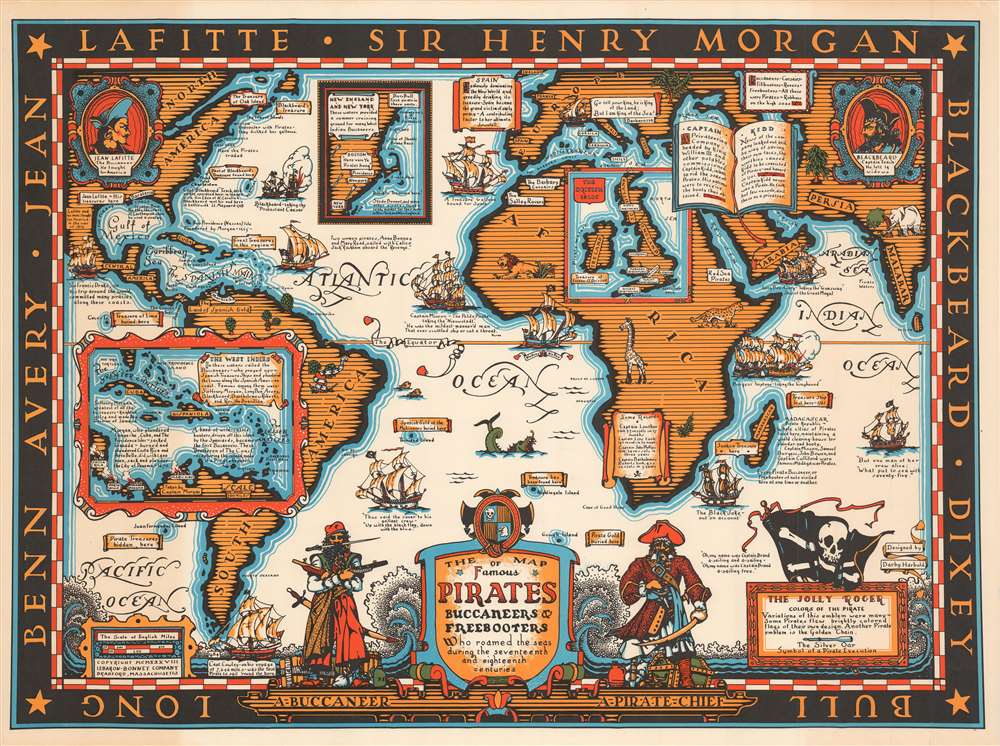
As a kid, I often wondered how cartographers could lay down depictions of a 3D planet onto 2D surfaces long before they could actually attain this physical perspective.
(Quick answer: math, measurement, and triangulation.)
And I also wondered why the earliest cartographers chose to map the earth by “bird’s eye view”? What did that Eureka feel like?
And why do we usually think about going up for finest knowledge? Not down?
Why map like a bird? Why not make maps with squid’s eye view? Or beaver’s eye view? Why not an everyday human view? What would those maps look like?1 And could they be useful too?
The question could also be parsed: why go “high” to depict “low”? Why not just give information about stuff from the first person perspective? After all, even the idea to make a given map a certain way must come from a person.
And, to further complicate this, humans arguably we didn’t first map by looking down, we mapped the stars, which was looking up and out into a vast expanse.

Starman
A SymbolWork by EM Matteson
Mapping probably first originated with us telling stories of the stars, and drawing diagrams for the sake of helping us navigate our experiences better here on earth.
As we watched skies at various times of year, we could find information about growing seasons, navigate direction to reach resources and other people, and even understand the nature of a day, one of the more important things we need to know as humans.
So this perspective of looking out and up helped us help our communities and ourselves in practical ways.
Perhaps star-mapping also gave some folks something to do, an artful occupation tied to storytelling, truth telling, and community well being. Those who produced good-looking, detailed “proof,” could help others understand what was happening here, by looking there. Or to be more accurate, looking at a depiction of there.
The depiction was a valuable object because it came from an attuned maker: one who knew things.
Later,2 maps of land and sea gave us depictions from the sky to earth, and this perspective bound us together as members of a larger expanse than perhaps we could see from the ground.

And to bring this piece into the space age really fast: astronomy and space exploration have taken mapping into a place where we can experientially stand far from our planet, and depict far flung places with great accuracy. Often by photos.
We can map pulsars as if standing on the edge of a black hole. And we can share a photo like this gorgeous one above– a view you or I may never see with our naked eyes – that can be verified by depiction and trust more of what we have collectively come to know as real and important.
Maps are a way to illustrate our human stories in a way that shows veracity of the experience, and importance of subject matter. And inside every map stands an invitation, direction, useful knowledge, and beauty.
For instance, if you share a map where oranges grow, and someone uses that map and also finds oranges, ta da! It was “true.”
Verifiable. Reproducible. People love both of these things.
Sharing common experiences is important to humanity. And those of us who explore by wonder, can utilize depiction and mapping disciplines to share our experience, along with wonderings which produce more experience.
This kind of mapping is called “art.”
Story Mapping Example: First Person Challenge
If you lived 300 years ago, and needed to tell someone how to successfully get somewhere with say, great spices, hospitality, and comfort, you could share a detailed narrative like, “just after the winter solstice, first travel on foot for 6 days from sun up to sundown. Look for the mountain that looks like a head in repose, traverse around it to the direction of the evening star, and pick up the trail in morning toward where the sun sets. Talk to who’s there, procure a guide and a wagon. Go by that method for 7 more days, giving food & drink to your guides, to keep their good company, then arrive at the river….”
This kind of instruction, a Story Map3, includes in words time (6 days, 7 days4), the length of “a day” (determined as short but getting longer, just after solstice), pace (on foot, by wagon), vector of travel (toward mountain then evening star), descriptions how to succeed (give food and drink), and also a destination (the river).
And because having an illustration is super lovely, why not visually depict this too? How would you do this from first person perspective? The creative challenge is to know where you stand, and write and show your story, mapping out where your depictions in a way that may not be looking up and out, or down. That’s a map too. Of the soul: a map in.
I need to bring this piece back around to complete it, says my editor mind, so here goes a call out to you:
What map can you make that will necessarily give peace, happiness, and maybe share a touch of wonder? What depiction styles fit you? What perspective is just right? Who may also like to see it?
FOOTNOTES & SUB-SUBTEXT 😉
I just found this amazing article with Aboriginal art serving as nature explainers and the finest art-cartography of the skies. It’s so rich, I can’t even go there.
- I have an answer to this, it looks like art. Here are many posts regarding this topic. ↩︎
- I am an artist and writer, not a scholar on maps and cartography. To be clear, the order of mapping the stars and the earth is not certain. Nor is the very first person who decided this was a worthy activity. I’d love to meet them if I could. ↩︎
- I’m hoping to goodness that I am coining this term freshly in this post: telling map.
As I have found by my other coined terms, taglines, inventions and hacks, sometimes they existed before, I just didn’t know it. Forgive me in advance!
Need a quick hack to soften butter for a baking? place your butter sticks on top of your coffee maker. Works great. Exactly the right melti-ness in about 20 minutes.
↩︎ - I’m so sorry 6 7 eye rollers. I had to do it. ↩︎
